Non-invasive body contouring: the science, and what it means for you
Non-invasive body contouring can look almost too simple from the outside: you lie down, a device is applied to your skin, and weeks later the treated area looks smoother or smaller. Understanding what is happening beneath the surface is not just interesting trivia. It changes how you interpret your own results week to week, why your provider recommends a specific number of sessions, and why patience with this category of treatment is not the same as settling for less.
This post walks through the main types of non-invasive body contouring available today, what is happening in your body during each one, and, most importantly, what that means practically for what you should expect, when, and why.
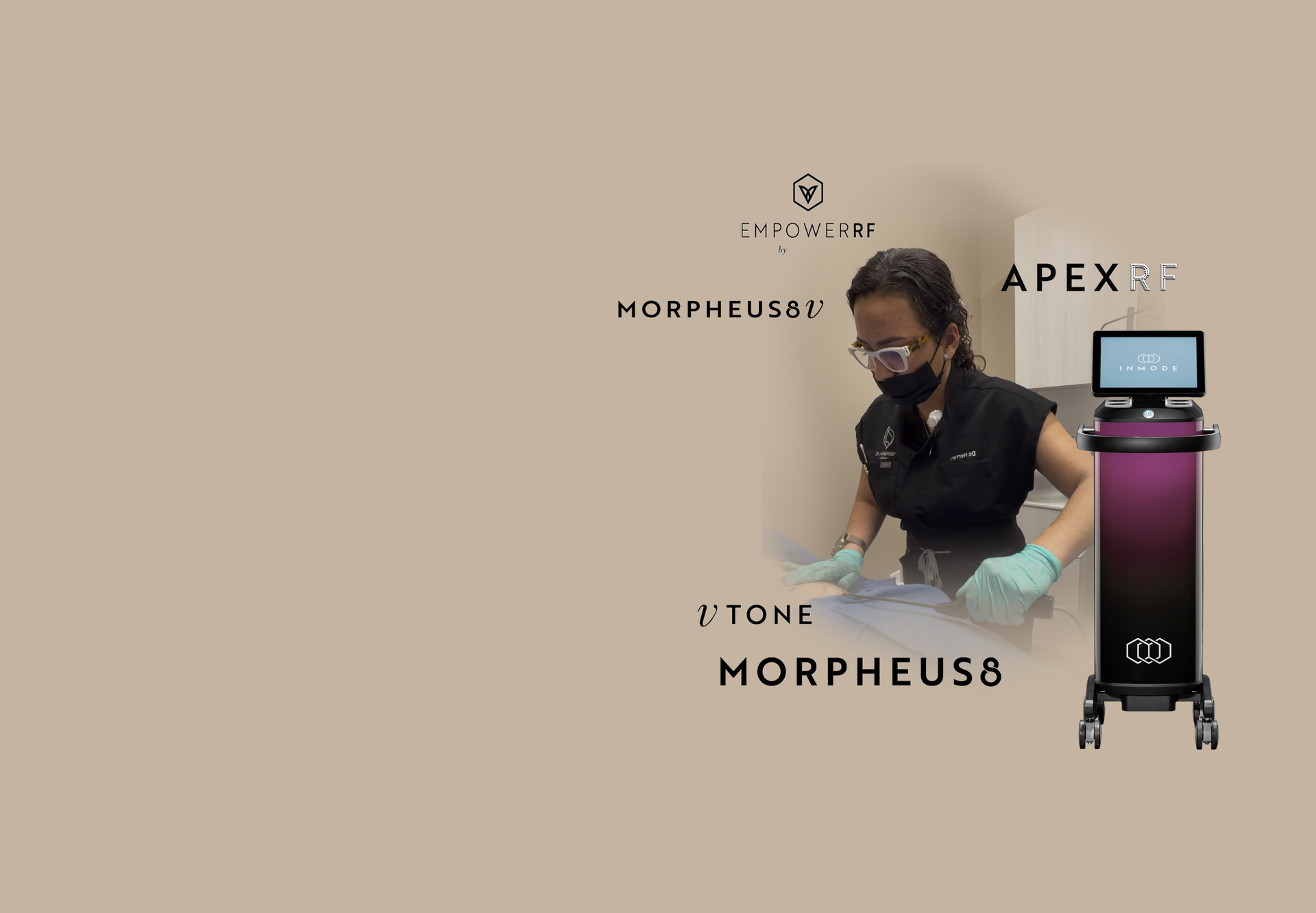
In case you are new here, I am Brenda Herrera, founder of Herrera MD MedSpa, a physician-led medical spa helping women reconnect with their confidence through ethical, medically guided aesthetic care. Patients often ask us to explain what is happening during treatment, and we think that curiosity deserves a real answer, translated into what it means for your body and your timeline, not just a textbook definition.
The main types of non invasive body contouring
Not all non-invasive treatments work the same way or solve the same problem, which is exactly why matching the right type to your concern matters more than picking whichever one you have heard of.
Cryolipolysis (the CoolSculpting category)
Cryolipolysis uses controlled cooling to damage fat cells while leaving skin and muscle unharmed. If your main frustration is one specific, well-defined pocket of fat, like a bra bulge or lower belly pooch that will not budge no matter how clean you eat, this category is built for exactly that. It will not help loose skin or cellulite in the same area, so if those are also part of your picture, cryolipolysis alone will leave you only partly satisfied.
Laser-based fat and skin treatments
Laser devices use light energy to either heat and break down fat cells or stimulate collagen in the skin, depending on the wavelength and depth used. Laser treatments are often a good fit if skin quality, not just fat volume, is part of what bothers you, since certain lasers are specifically built to firm skin rather than just shrink fat underneath it.
Radiofrequency skin tightening
Radiofrequency heats the deeper layer of your skin to stimulate new collagen. If you look in the mirror and the word that comes to mind is "looser" or "less firm" rather than "bigger," radiofrequency is addressing the actual thing bothering you, where a fat-reduction-only treatment would miss the mark entirely.
Acoustic wave and vacuum-based cellulite treatments
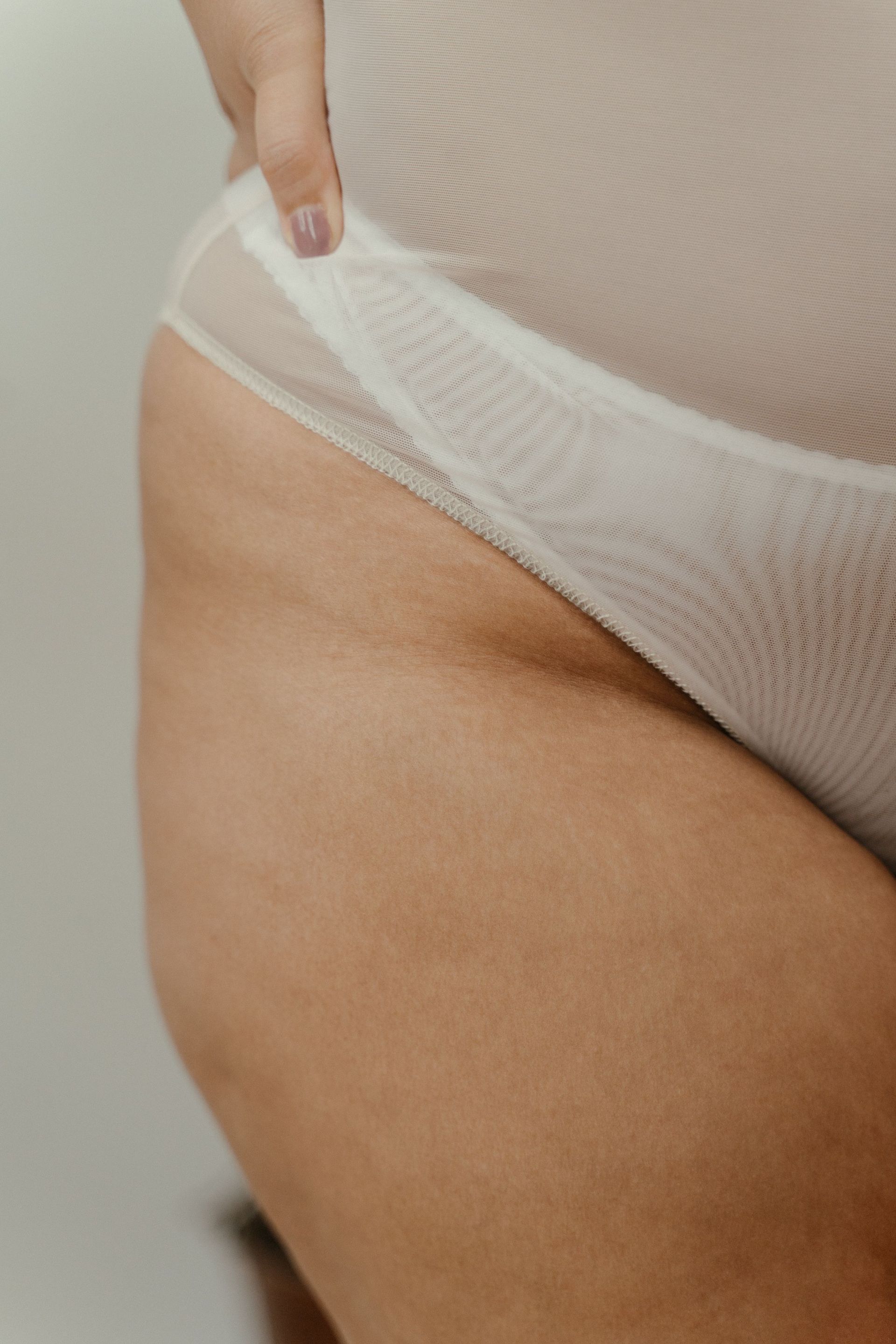
These use sound waves or suction to mechanically disrupt the fibrous bands that cause cellulite dimpling. If your frustration is specifically the dimpled texture on your thighs or backside rather than the overall size of the area, this is the category built to change what you are seeing, not just the volume underneath it.
Combination devices like T-Shape 2
T-Shape 2 layers radiofrequency, laser, and vacuum technology into one device, addressing fat, skin laxity, and cellulite together rather than one at a time. Most women who come to us do not have just one isolated concern in an area, they have some fullness, some looseness, and some texture all in the same spot. A combination approach like T-Shape 2 exists because treating only one of those three and ignoring the others tends to leave you looking at the same problem in the mirror, just slightly smaller.
What is happening in your body, and why it takes time
Every one of these technologies works by triggering a biological process, not by instantly removing anything. Understanding this is the difference between feeling confident through your treatment series and feeling like something is not working.
Fat cell disruption: why you will not see change overnight
Cold, heat, or ultrasound-based fat treatments damage the fat cell membrane, and your own immune system then clears those damaged cells through your lymphatic system over the following weeks. If you step out of a treatment expecting to see a flatter stomach immediately, you are going to be disappointed, not because the treatment failed, but because your body has not finished its job yet. Most women start noticing a real difference around four to six weeks in, which is worth knowing before you start so you do not lose confidence in week two.
Collagen remodeling: why skin tightening feels slow
Radiofrequency and certain lasers heat your skin enough to trigger new collagen production, but collagen builds gradually over about three months. The firmness you are hoping to see in your abdomen or arms after a course of treatments is not going to show up in week one, or even week four. This is a slow-building process by design, and sticking with the full recommended series matters more here than with almost any other part of the plan.
Mechanical release: why the vacuum sensation matters
The suction used in devices like T-Shape 2 physically helps release the fibrous bands under your skin that cause cellulite, and it improves lymphatic drainage in the area. That massage-like sensation during treatment is not just for comfort, it is doing real, mechanical work on the texture you are trying to change, alongside the energy-based part of the treatment.

Your results timeline, translated into what you will notice
| Timeframe | What is happening biologically | What you will likely notice |
|---|---|---|
| Right after treatment | Mild swelling, redness, or numbness | Probably nothing different yet, and that is normal |
| 1 to 2 weeks | Swelling resolves, fat cell clearance begins | Clothes may fit slightly differently, but changes are subtle |
| 3 to 6 weeks | Continued fat clearance, early collagen changes | The first real "wait, is that working?" moment for most patients |
| 6 to 12 weeks | Peak visible improvement in fat and firmness | The change most patients take before-and-after photos to capture |
| 3 to 6 months | Full results settle in | The version of the results you should judge the treatment by |
If you compare yourself to your own photos at week one instead of month three, you are judging an unfinished process. This table exists so you know exactly which week you are in and what to reasonably expect from it.
Why the specific device matters less than the match to your concern
It is easy to get pulled toward whichever device has the most buzz, but the honest truth is that the newest or most talked-about technology is not automatically the right one for you. A patient whose main issue is cellulite texture will not be well served by the most advanced fat-freezing device on the market, no matter how impressive its marketing looks. This is why we walk through your specific concern first and match it to the category, and often the specific device, that is built to address it.
Safety: what the data says and what it means for your decision
Non-invasive body contouring devices are FDA-cleared medical devices, and clinical studies generally report a favorable safety profile, with side effects typically limited to temporary redness, swelling, numbness, or mild bruising that resolve within days.
A rare risk worth knowing about
Some fat-reduction technologies, most notably cryolipolysis, carry a rare but documented risk called paradoxical adipose hyperplasia, where treated fat tissue enlarges instead of shrinking. This is uncommon, but it is real, and it is worth a direct conversation with your provider about your individual risk factors rather than assuming every technology carries identical risk.
Why the provider matters as much as the device
Two providers using the exact same FDA-cleared device can produce very different results, because outcomes depend on proper candidate selection and correctly calibrated settings, not the device alone. Ask who is performing your treatment, what their training is, and how many patients with your specific concern they have treated, since that answer matters as much as which machine sits in the room.
How we translate the science for our patients
We walk every patient through which type of treatment matches her specific concern, what is happening in her body at each stage, and what she should expect to see and when, so that the entire experience feels like an informed partnership rather than a mystery you are trusting us to handle alone.
You do not need to memorize the biology to know whether a treatment is working. You just deserve a provider who translates it into what it means for you, at every step.
Every non-invasive body contouring consultation includes a clear explanation of which treatment fits your concern and what your personal timeline will likely look like. We proudly serve patients from our Med Spa in Rochester Hills, MI location. Book your consultation today.
Hi, I’m Dr. Brenda Herrera
An internal medicine physician with nearly two decades of experience





Medical disclaimer. The content on this blog is provided for general informational and educational purposes only. It does not constitute medical advice, a medical opinion, a diagnosis, or a treatment recommendation, and it is not a substitute for care from your own physician or another qualified healthcare provider. Reading this blog or contacting us through this site does not create a physician-patient relationship. Always seek the advice of your physician with any questions you may have about a medical condition, and never disregard or delay seeking professional medical advice because of something you read here. If you think you may have a medical emergency, call 911 or go to the nearest emergency room immediately.